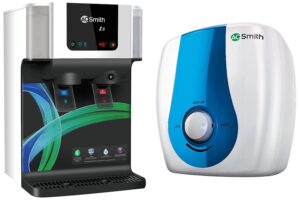
Yes, for many workplaces, commercial facilities, and hospitality properties a drinking water cooler machine with in-built purification can be a practical investment because it combines water purification and cooling in one system. Instead of managing separate appliances, facilities can provide purified, chilled drinking water through a single unit, making everyday access simpler while using space more efficiently. The right choice, however, depends on factors such as the number of users, the quality of the incoming water and the workplace’s daily water requirements.
Access to purified water is one of those things that quietly supports every commercial property. That’s one reason businesses are beginning to rethink how they provide drinking water. Instead of asking whether they need a purifier or a cooler, many are asking whether it makes more sense to have both working together.
Benefits of Water Cooler Machines with In-Built Purification
Here are some of the significant benefits of such water cooler machines that justify their worth, especially when you buy them from credible brands.
- Multi-Stage Purification Process: A water cooler with in-built purification can use multiple filtration stages to address different impurities in the incoming water. Depending on the model, these may include technologies such as RO, UV, UF, carbon filtration, and active copper and zinc booster, helping improve the quality of water before it is dispensed.
- Powerful Cooling System: A reliable cooling system helps keep water chilled and ready to drink, even in shared spaces where the cooler is used frequently throughout the day. This makes it suitable for places such as offices, schools, factories and other high-footfall environments.
- High-Capacity Storage Tank: A larger storage capacity helps ensure that more people can access drinking water without having to wait for the unit to cool and replenish water after every use. It can be particularly useful in workplaces and other spaces with regular demand.
- Tough, Hygienic, and Durable Body: The body and storage components of a water cooler are designed to handle regular use in shared environments. Depending on the model, durable and hygienic materials can also make the unit easier to maintain over time.
Read More: A Complete Bedroom Styling Guide for Modern Living
Factors to Consider Before Choosing a Drinking Water Cooler Machine
●Integrated vs. Separate Systems: Which Setup Suits Your Workplace?
Many workplaces already have a purifier in one corner and a water cooler somewhere else. There’s nothing wrong with that arrangement. But it also means finding room for two appliances, maintaining both and ensuring each continues to perform as expected.
A drinking water cooler machine with in-built purification approaches the problem differently. Water is purified before it is cooled, allowing employees, customers, or visitors to access clean, chilled drinking water from one point instead of moving between separate systems. It isn’t simply about reducing clutter. For workplaces where drinking water is used throughout the day, a single integrated setup can make everyday routine feel much smoother.
● Daily Water Demand: Match the System to Workplace Usage
Here’s something that’s easy to overlook. An office, a school, and a factory won’t use water the same way. Consider this, a team of thirty people in an office rarely walks up to the pantry at exactly the same time. Water consumption is usually spread across the day.
Now compare that with a school just after the lunch bell rings. Within minutes, dozens of students are filling bottles together. Restaurants often experience similar rushes before lunch and dinner service, while manufacturing facilities may see higher demand around shift changes.
The total amount of water used by the end of the day might be similar, but the pattern of consumption is completely different. That is why choosing a drinking water cooler machine isn’t only about daily capacity. It is also about making sure purified water is available when demand suddenly peaks.
● Water Source and Purification Technology: Start with Feed Water Quality
Before selecting a commercial water purification system, it helps to understand the quality of the incoming water. Municipal supply, borewell water, and other sources can differ in TDS (Total Dissolved Solids) levels, hardness, and suspended impurities, so the treatment process is usually based on a feed water analysis rather than a standard configuration.
The findings from the water analysis determine whether multi-stage filtration is required and which treatment stages are best suited to the application. A commercial system may include:
- Sediment filtration to reduce suspended particles such as sand, silt, and rust before the main purification process.
- Activated carbon filtration to help reduce chlorine while improving the taste and odour of water.
- RO technology where the feed water contains higher levels of dissolved impurities that require additional treatment.
- UV or UF purification, depending on the source water and the level of treatment required.
Every facility has different water requirements, so the treatment process is usually selected after the feed water has been assessed. Where larger volumes of purified water are needed across day-to-day operations, an RO plant may be a better fit than a standard commercial purification system.
Choosing What Works for Everyday Operations
A drinking water cooler machine should be selected around the way the workplace uses water every day. Daily demand, peak usage, source water quality and TDS (Total Dissolved Solids) levels often provide a clearer basis for comparison than specifications alone.
Read More: How to Choose the Best Outdoor Wall Paint and Exterior Wall Texture Design for Your House
Before finalising the system, it is worth reviewing whether the treatment process matches the incoming water and the expected demand. Depending on the application, this may include multi-stage filtration with RO, UV, UF, sediment filtration, or activated carbon. Where larger volumes of purified water are required across the facility, an RO plant may be a more suitable option.